
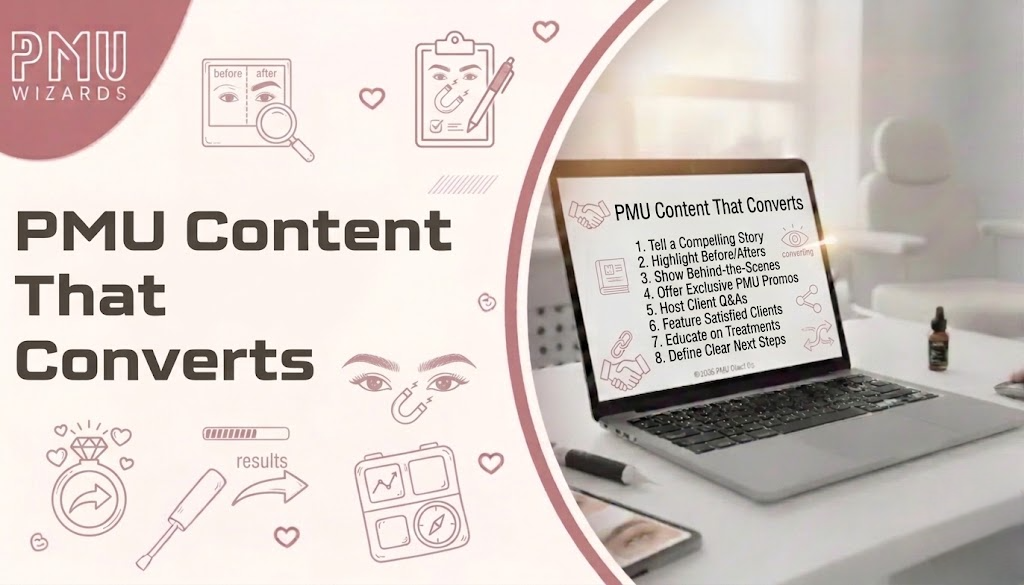
Many PMU businesses struggle with low conversions due to unclear messaging, weak local SEO, and lack of trust signals. High-performing PMU content focuses on intent-driven structure, authority, and client psychology—combining SEO, social proof, and strategic calls-to-action to turn traffic into booked appointments.
Understanding the Real Problem Behind Low-Converting PMU Content
What is low-converting PMU content?
Low-converting PMU content is content that attracts traffic but fails to turn visitors into leads or bookings. It often lacks clear intent alignment, trust signals, and conversion-focused structure, leading to high bounce rates and minimal client engagement.
Why does PMU content fail to convert?
Most PMU artists focus on aesthetics instead of strategy. Content may look beautiful but doesn’t answer client concerns, build trust, or guide users toward booking. According to HubSpot, conversion-focused content must align with user intent and decision-making stages.
How can you fix low conversions?
Fixing conversions requires aligning content with search intent, adding authority signals, and guiding users through a structured journey—from awareness to booking—using SEO, social proof, and optimized calls-to-action.
The 5 Core Reasons Your PMU Content Isn’t Converting
1. You’re Attracting the Wrong Audience
Based on PMU campaign performance, many artists rank for broad keywords like “eyebrows” instead of high-intent searches like “lip blush near me.”
Fix:
- Target local, intent-driven keywords
- Focus on “near me” and service-specific searches
- Optimize for location pages
2. Your Content Lacks Trust Signals
Across high-performing PMU clinics, trust is the #1 conversion factor.
Missing elements:
- Before-and-after photos
- Verified client reviews
- Certifications and experience
- Real results and testimonials
According to Think with Google, users need multiple trust touchpoints before making a decision.
Fix:
- Add real client transformations
- Showcase Google reviews
- Include practitioner credentials
3. No Clear Conversion Path
What is a conversion path in PMU marketing?
A conversion path is the structured journey guiding a visitor from reading content to booking an appointment, including CTAs, forms, and booking systems.
Many PMU websites lack:
- Clear CTAs
- Easy booking options
- Logical page flow
Fix Framework:
- Educate (blog content)
- Build trust (reviews, results)
- Guide (CTA buttons)
- Convert (booking system)
4. Weak SEO Structure and Content Depth
In real PMU studio marketing data, thin content rarely ranks or converts.
Google Search Central (https://developers.google.com/search) emphasizes:
- Helpful, people-first content
- Clear structure
- Topic authority
Fix:
- Use H2 and H3 structure
- Answer specific client questions
- Create in-depth service pages
5. You’re Not Addressing Client Psychology
Why is client psychology important in PMU marketing?
PMU clients make decisions based on trust, fear reduction, and visual proof. Content that addresses concerns like pain, healing, and results converts significantly better.
Fix:
- Address fears (pain, safety, results)
- Show realistic outcomes
- Use educational content
Why isn’t my PMU website getting bookings?
Because it lacks trust signals, clear CTAs, and intent-driven content aligned with client needs.
What type of content converts best for PMU artists?
Before-and-after results, client testimonials, and localized service pages convert the highest.
How important is SEO for PMU businesses?
SEO is critical for long-term visibility and consistent client acquisition without relying solely on ads.
Do reviews really impact PMU conversions?
Yes, reviews significantly increase trust and influence booking decisions.
Should PMU artists use paid ads?
Yes, Google Ads and Meta Ads can accelerate client acquisition when combined with strong landing pages.
The High-Converting PMU Content Framework
Step-by-Step System
| Step | Action | Outcome |
| 1 | Keyword research (local + intent) | Attracts qualified traffic |
| 2 | Create educational blog content | Builds awareness |
| 3 | Add social proof | Builds trust |
| 4 | Optimize CTAs | Drives action |
| 5 | Integrate booking system | Converts leads |
Content Strategies That Actually Work for PMU Artists
Awareness Stage (Top Funnel)
- Blog posts: “What is Lip Blush?”
- Social media educational content
- SEO-driven FAQs
Consideration Stage (Middle Funnel)
- Comparison guides (Microblading vs Powder Brows)
- Before-and-after galleries
- Client testimonials
Decision Stage (Bottom Funnel)
- Service pages with pricing clarity
- Booking CTAs
- Local SEO optimization
Paid Ads and Content Must Work Together
How do Google Ads support PMU content?
Google Ads drive immediate traffic to optimized pages, while SEO builds long-term visibility.
According to Backlinko, combining paid and organic strategies increases conversion rates significantly.
Best practice:
- Send ad traffic to optimized landing pages
- Match ad messaging with content
- Track conversions
Automation and Booking Optimization
What role does automation play in PMU conversions?
Automation reduces friction in the booking process, ensuring leads don’t drop off before scheduling.
Examples:
- Instant booking confirmations
- Automated follow-ups
- CRM-based client tracking
Based on real PMU campaign performance, studios using automation see higher booking rates and better client retention.
Original Strategic Insights (PMU-Specific)
Insight #1:
High-performing PMU studios don’t just post results—they contextualize them. Adding captions explaining skin type, healing results, and technique increases conversion rates because clients see relatable outcomes.
Insight #2:
Local SEO pages outperform social media in long-term bookings. While Instagram drives awareness, Google search captures high-intent clients ready to book immediately.
FAQs
Why is my PMU Instagram not converting into clients?
Because social media builds awareness, but without a strong website and booking system, users don’t convert.
How long does SEO take for PMU businesses?
Typically 3–6 months, depending on competition and content quality.
What should a PMU website include?
Service pages, before-and-after photos, reviews, FAQs, and an easy booking system.
Is content marketing worth it for PMU artists?
Yes, it builds authority, improves SEO, and attracts long-term clients.
If your PMU content is getting traffic but not converting, it may be time to refine your strategy with a data-driven approach. You can reach out to PMU Wizards at [email protected] or call +1 929 583-5756 for expert insights tailored to your studio.
Sources
- HubSpot – https://blog.hubspot.com/marketing
- Think with Google – https://www.thinkwithgoogle.com
- Google Search Central – https://developers.google.com/search
- Backlinko – https://backlinko.com